
Melasma
Skin Concerns / Melasma
What Is Melasma?
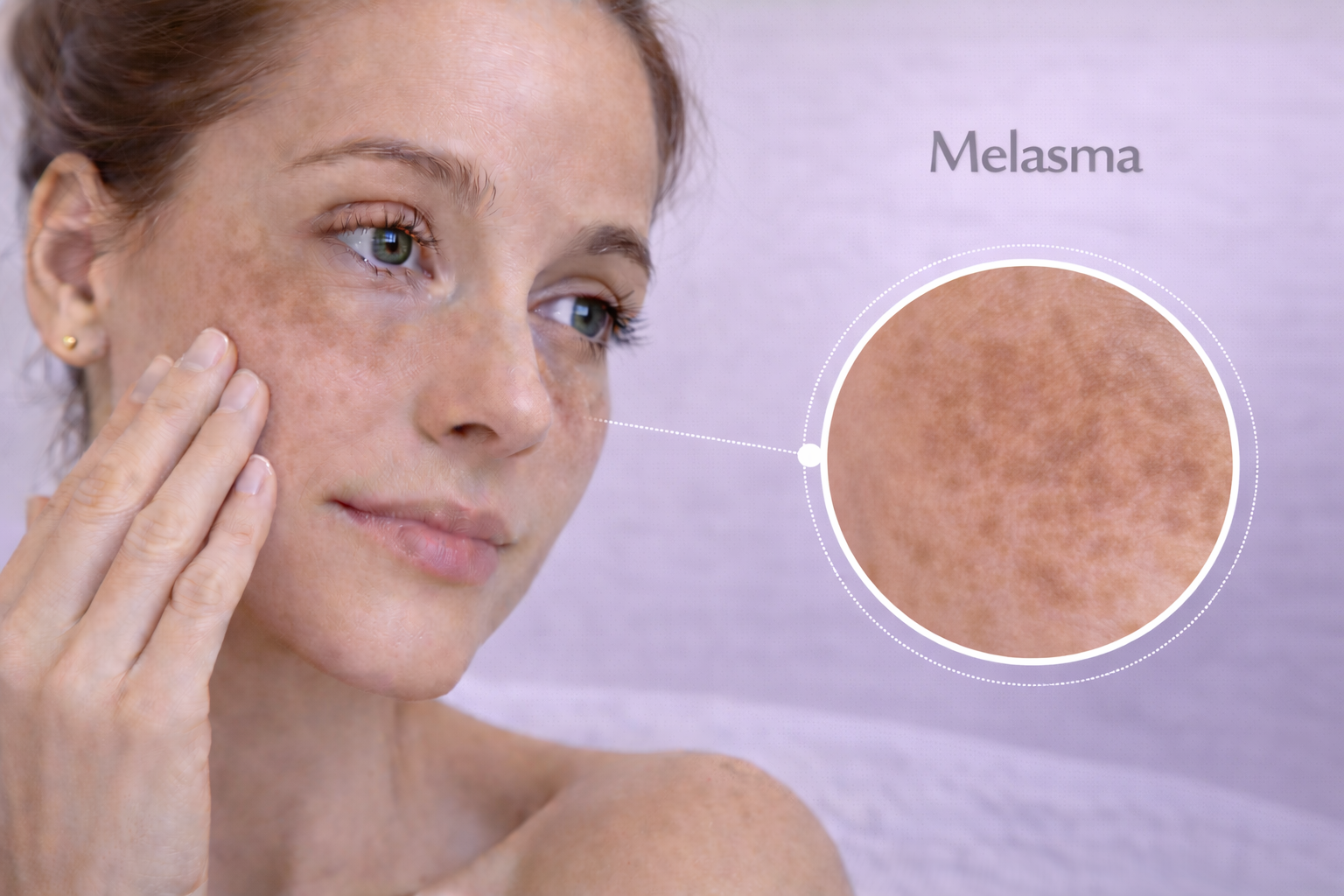
Melasma is a common form of pigmentation that appears as darker patches of skin, usually on the cheeks, forehead, nose, or upper lip. It develops when excess melanin is produced in certain areas, creating uneven skin tone and discolouration.
Often linked to hormonal changes and sun exposure, melasma can become more noticeable over time and may fluctuate in intensity. While it can be persistent, targeted treatments and the right skincare approach can help manage pigmentation and improve overall skin clarity.
What Causes Melasma?
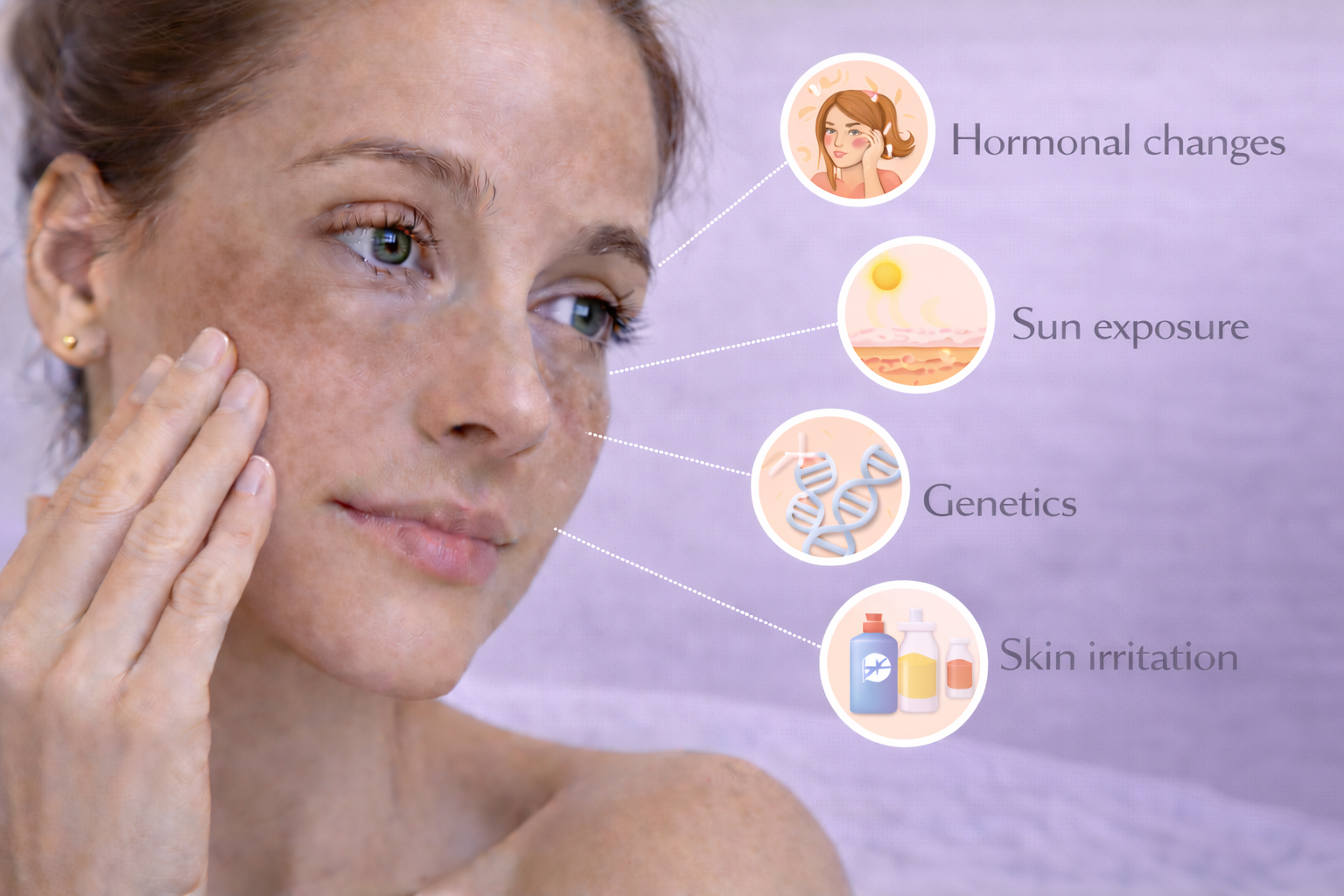
Melasma develops when melanocytes, the cells responsible for producing pigment, become overactive and produce excess melanin in certain areas of the skin. Sun exposure is a major trigger, as ultraviolet light stimulates pigment production and can worsen existing patches.
Hormonal changes, including pregnancy or hormonal fluctuations, are also closely linked to melasma. Genetics and skin sensitivity may further influence how pigmentation develops and persists, which is why managing triggers plays an important role in treatment and long-term skin balance.
Potential Factors That Contribute To Melasma
Several factors can influence the development and persistence of melasma. Sun exposure, hormonal fluctuations, genetics, and increased skin sensitivity can all trigger excess pigment production, making patches more noticeable over time.
Environmental exposure, heat, and certain skincare products may also worsen pigmentation in some individuals. Identifying these contributing factors helps guide treatments focused on managing triggers and improving overall skin tone and clarity.
What are the symptoms?
Melasma typically appears as symmetrical dark patches or areas of discolouration on the face, most commonly affecting the cheeks, forehead, nose, and upper lip. The pigmentation is usually flat and painless but can vary in intensity depending on sun exposure and hormonal changes.
The skin may otherwise feel normal, but uneven tone and visible patches can affect overall complexion clarity. Recognising these symptoms helps guide treatments focused on managing pigmentation and restoring a more balanced, even-looking skin tone.
Treatments For Melasma
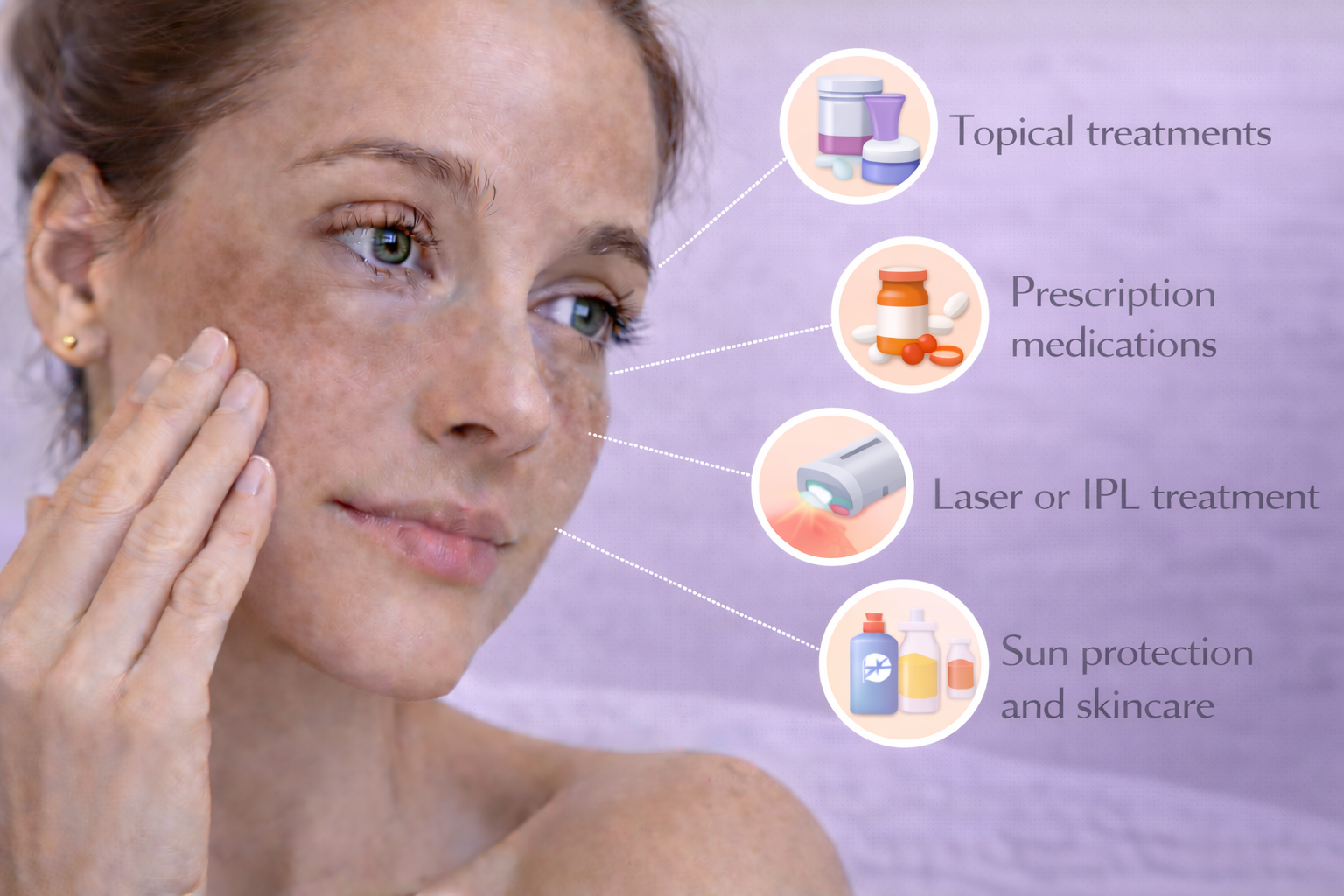
At Skin&, treatments for melasma focus on gently reducing excess pigmentation while supporting overall skin health. Our approach aims to manage melanin production and improve skin clarity through carefully tailored treatment plans designed for sensitive, pigment-prone skin.
Personalised treatments are selected based on your skin type and triggers, helping to gradually soften the appearance of dark patches and promote a more even, balanced complexion over time.