
Acne Scarring
Skin Concerns / Acne Scarring
What is acne Scarring?
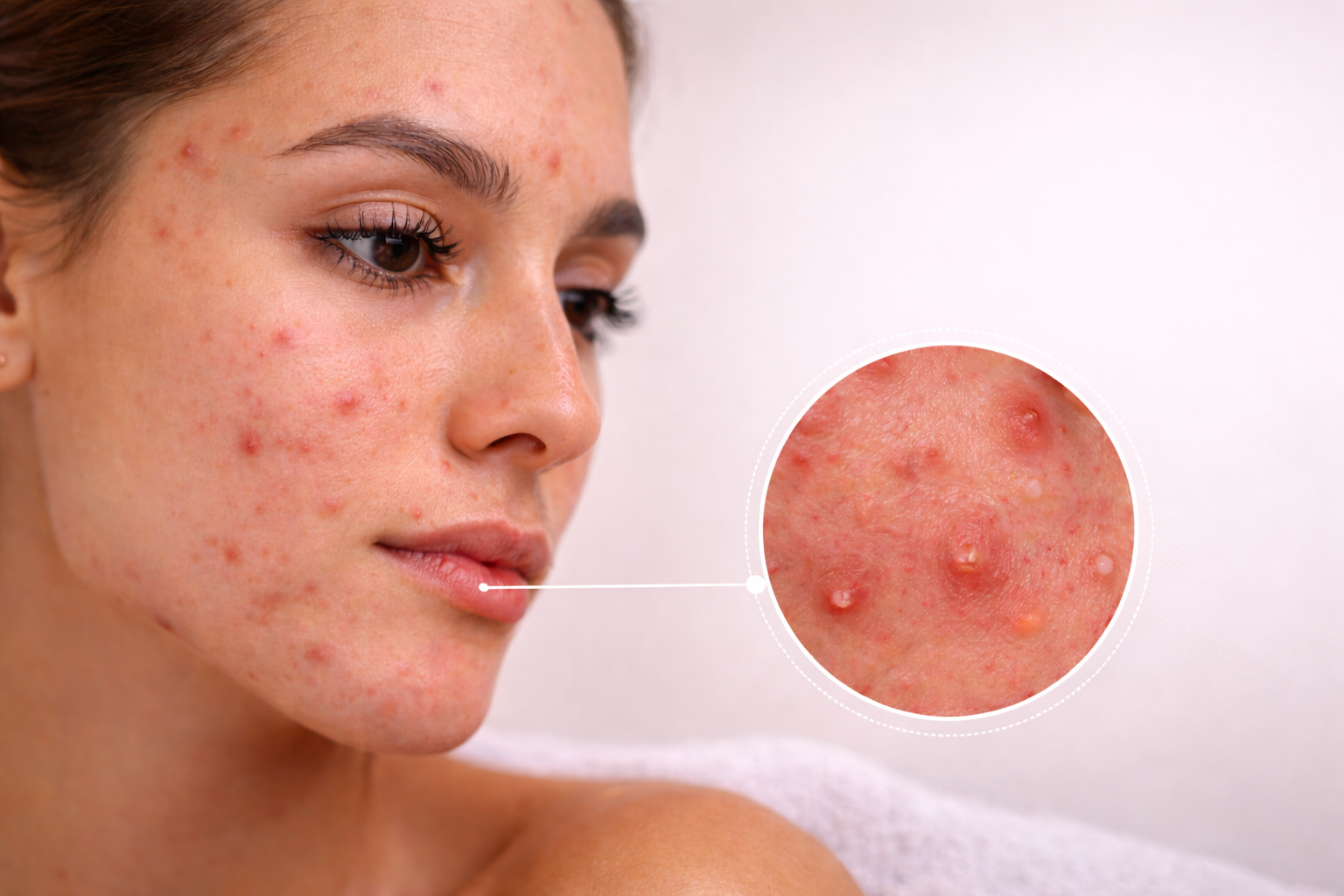
Acne scarring occurs when breakouts penetrate deeper layers of the skin, causing damage to the underlying tissue during the healing process. As the skin repairs itself, changes in collagen production can lead to visible marks, uneven texture, or depressions that remain after active acne has cleared.
Scarring can vary in appearance from shallow indentations and textured skin to darker marks or uneven skin tone. While acne itself may be temporary, scarring can persist without targeted treatment. With the right approach, however, skin texture and overall clarity can be significantly improved over time.
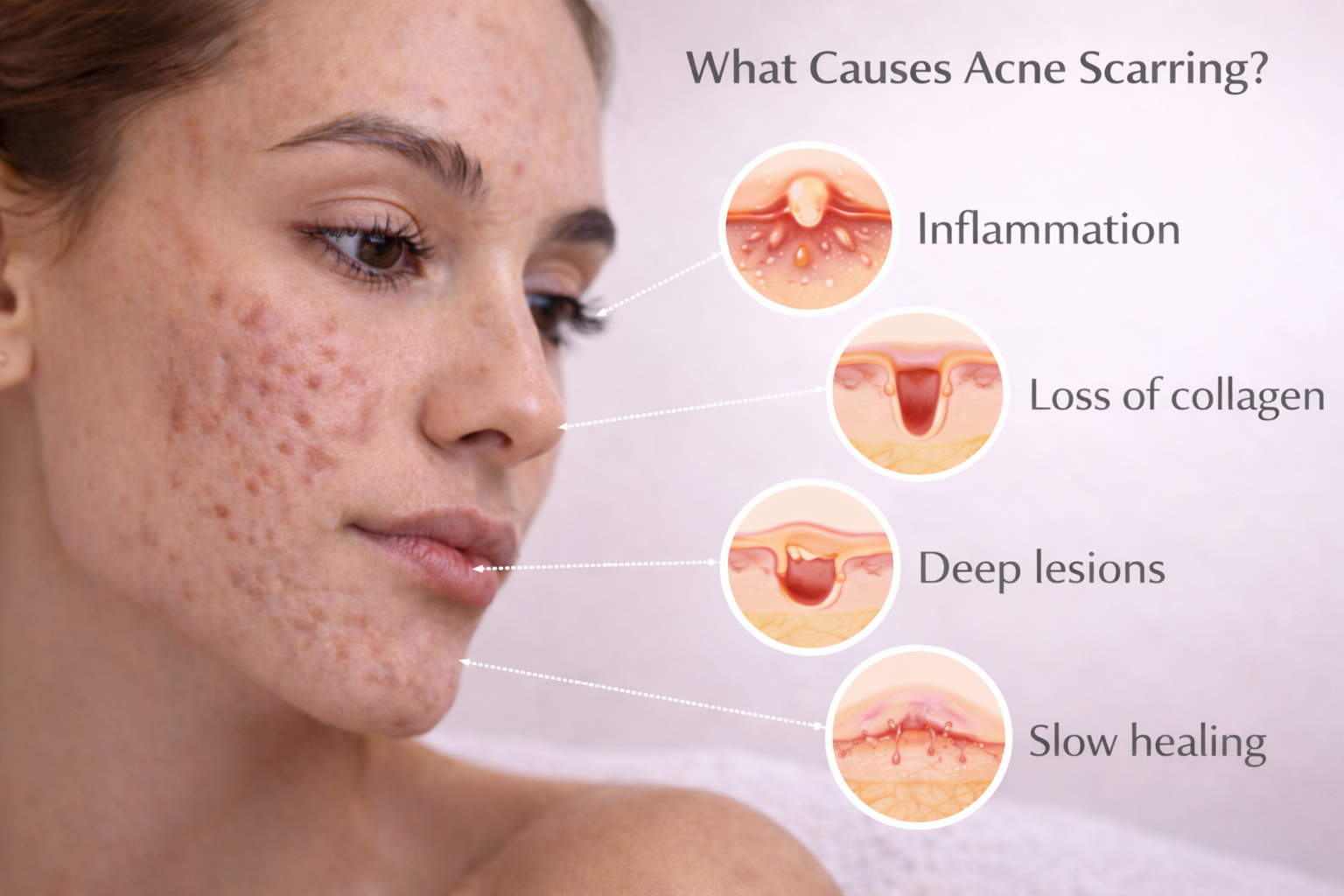
What Causes Acne Scarring?
Acne scarring develops when inflammation from breakouts damages the deeper layers of the skin. As the skin heals, changes in collagen production can lead to uneven texture or visible scars.
Severe or long-lasting acne, delayed treatment, and picking or squeezing spots can increase the risk of scarring. Skin type and individual healing response also influence why some people develop scars while others do not.
Understanding these causes helps guide effective treatments focused on improving skin texture, supporting collagen renewal, and restoring smoother-looking skin over time.
Potential Factors That Can Contribute To Acne Scarring
Several factors can influence whether acne leads to scarring and how noticeable those scars may become. The severity and duration of breakouts, repeated inflammation, and delayed or ineffective treatment can all increase the risk of permanent skin changes. Habits such as picking or squeezing spots may also disrupt the skin’s natural healing process and worsen scarring.
Skin type and genetics can affect how the skin produces collagen during recovery, meaning some individuals are naturally more prone to developing scars. Identifying these contributing factors allows treatments to be tailored more effectively, supporting skin repair and improving overall texture and appearance over time.
What are the symptoms?
Acne scarring can appear in different forms depending on how the skin heals after breakouts. Common signs include uneven skin texture, small indentations, raised areas, or lingering discolouration such as red or dark marks.
The severity of scarring can vary from mild textural changes to more noticeable skin irregularities that affect overall smoothness and tone. Identifying the type of scarring helps guide the most effective treatment approach for improving skin texture and achieving a more even-looking complexion over time.
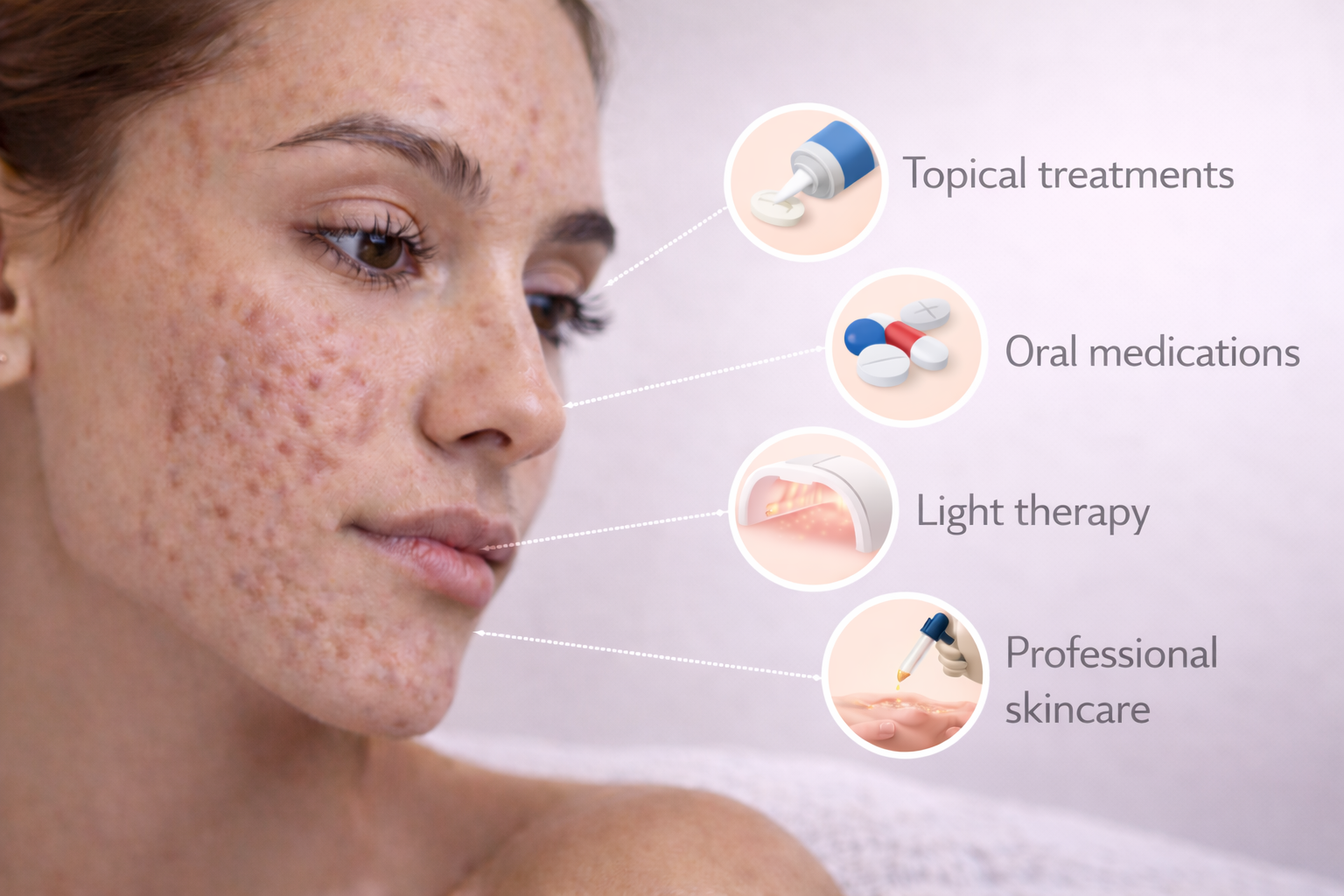
Treatments for acne
At Skin&, treatments for acne scarring are tailored to improve skin texture, stimulate natural collagen renewal, and support long-term skin health. Rather than focusing on quick fixes, our approach works gradually to smooth uneven areas and restore a clearer, more refined appearance.
Depending on your skin type and the severity of scarring, personalised treatment plans are designed to encourage skin regeneration, improve tone and texture, and reduce the visibility of scars over time. The goal is natural-looking improvement that strengthens the skin while delivering lasting results.